
1. The Paradox: Shorter vs. Longer Handles – Which Is Stronger?
At first glance, a longer handle seems “better” for grip—but in engineering, physics tells a different story. Our team uncovered a critical lesson: when force application area is fixed, shorter handles often outperform longer ones under the same load. Here’s why lever mechanics changed everything.
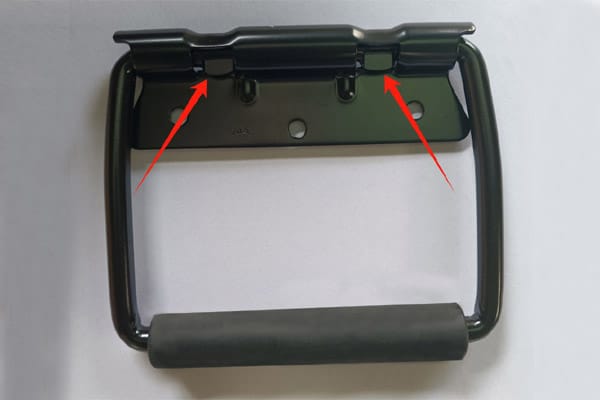
2. The Science: Lever Arm and Torque – The Hidden Force
The failure of the longer flight case handle boiled down to torque (rotational force), calculated by the formula: Torque = Force × Lever Arm
- Original (shorter) handle: Smaller lever arm → lower torque at the pivot (mounting point).
- Extended (longer) handle: Larger lever arm → same 50kg load created exponentially higher torque at the pivot. Even with 316L stainless steel (high strength), the structure couldn’t withstand the amplified force—it was overloaded at the connection points.
3. The Fix: Expand Force Application Area (No Size Changes!)
The challenge: Improve strength without altering the handle’s external dimensions (per customer specs) and at minimum cost. Our solution? Redistribute stress by expanding the internal force application area (see images for details):
- Added subtle internal ribs near the pivot points to spread torque.
- Optimized the handle’s curvature to balance load across the entire structure. Result: The modified longer handle now safely supports 50kg+—proving that smart design beats material alone.
4. Engineering Takeaway: Physics Trumps Assumptions
- Ask: “What’s the lever arm?” Length isn’t always better—torque determines structural limits.
- Force distribution > material strength: Even premium metals fail if stress concentrates at weak points.
- Small tweaks, big results: Internal redesigns (like expanded force areas) solve problems without costly overhauls.
